



Residual current protections
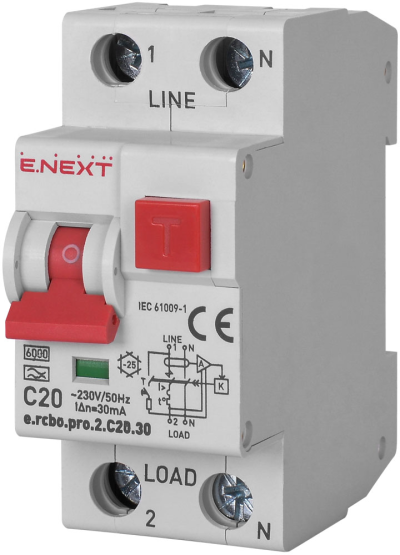
Our customers often confuse residual current protection and combined residual current protection, and some do not see the difference between these devices at all. The difference between residual current protection and combined residual current protection is that the former does not have
Learn more
overcurrent protection, which must be installed additionally, for example in the form of a circuit breaker. Combined residual current devices are devices that combine the functions of circuit breakers and residual current protection (protective tripping devices).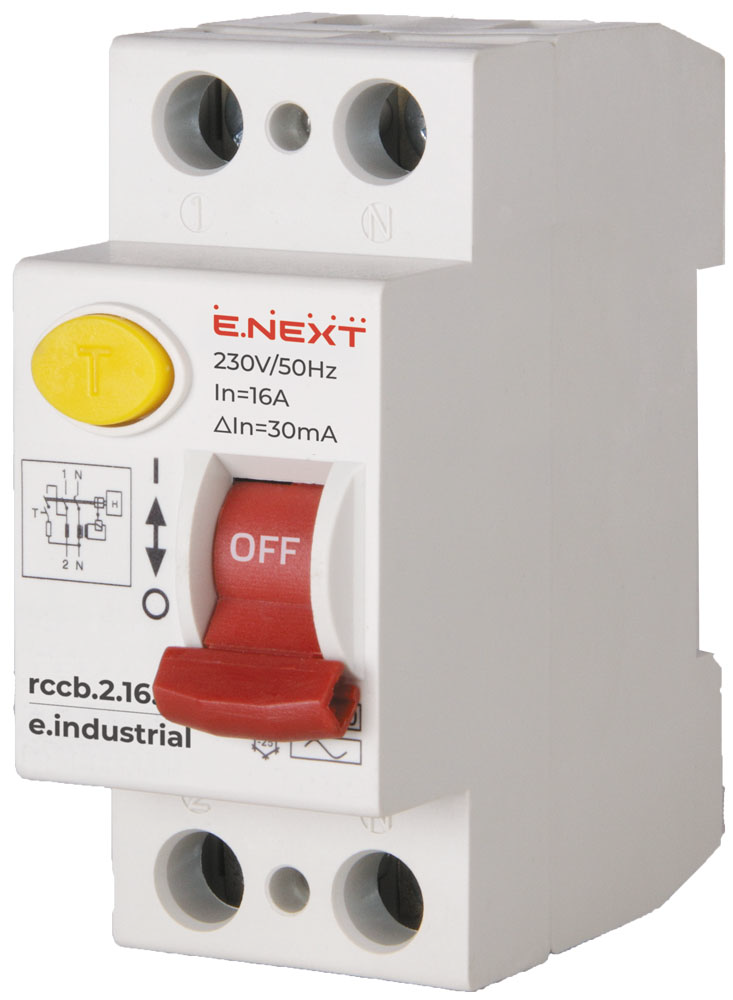
What is differential current, where does it come from?
As the name suggests, this is the difference between the currents flowing through the phase conductor to the consumer and through the neutral working conductor back. The sensing element is a differential transformer installed inside the device.
In normal operation of the network, these currents are equal to each other. When an accident occurs, a leakage current occurs, i.e. the "incoming" current is less than the "outgoing" by the amount of the leakage current. If the leakage current in the network is equal to or higher than 50% of the set point for the residual current protection, the device disconnects the protected line.
More often, residual current protection is installed on group socket lines, consumer lines in contact with water (washing machine, boiler, dishwasher, etc.). Thanks to the use of residual current protection, it was possible to significantly reduce the level of electrical injuries during the daily operation of various types of electrical equipment. Residual current protection with a leakage current of 10mA and 30mA is designed to protect a person from electric shock, and residual current protection with 100mA and 300mA is used to protect buildings from fires that can be caused by aging insulation and heating of current-carrying elements of the network.
Types of residual current protection.
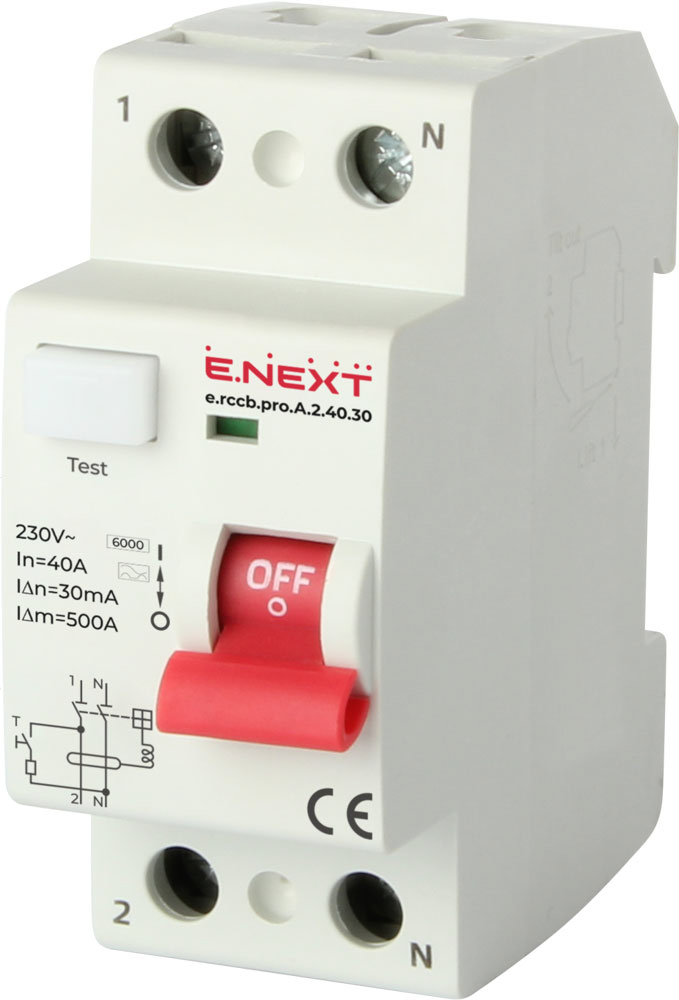
The first and simplest type is the residual current device, which is triggered when an alternating current leakage occurs. This type of residual current device is usually called the alternating current type. Residual current devices of this type are marked either with the word AC or with the ac "~" symbol on their housing.
The second subtype of devices is considered a device for triggering in the presence of alternating or direct (pulsating) current in the circuit or with its slow growth. This type is called type A. Devices of this type are marked with the symbol a or a rectangular symbol with two tildes (with different amplitudes).
The third subtype of devices is considered a device for triggering when direct, alternating or rectified leakage current occurs. Such devices are marked with a symbol on the case and are intended for use in industry.
The first two subtypes can be used at home. There are several subtypes of residual current devices according to their operating principle: electromechanical and electronic.
Subtypes of residual current protection
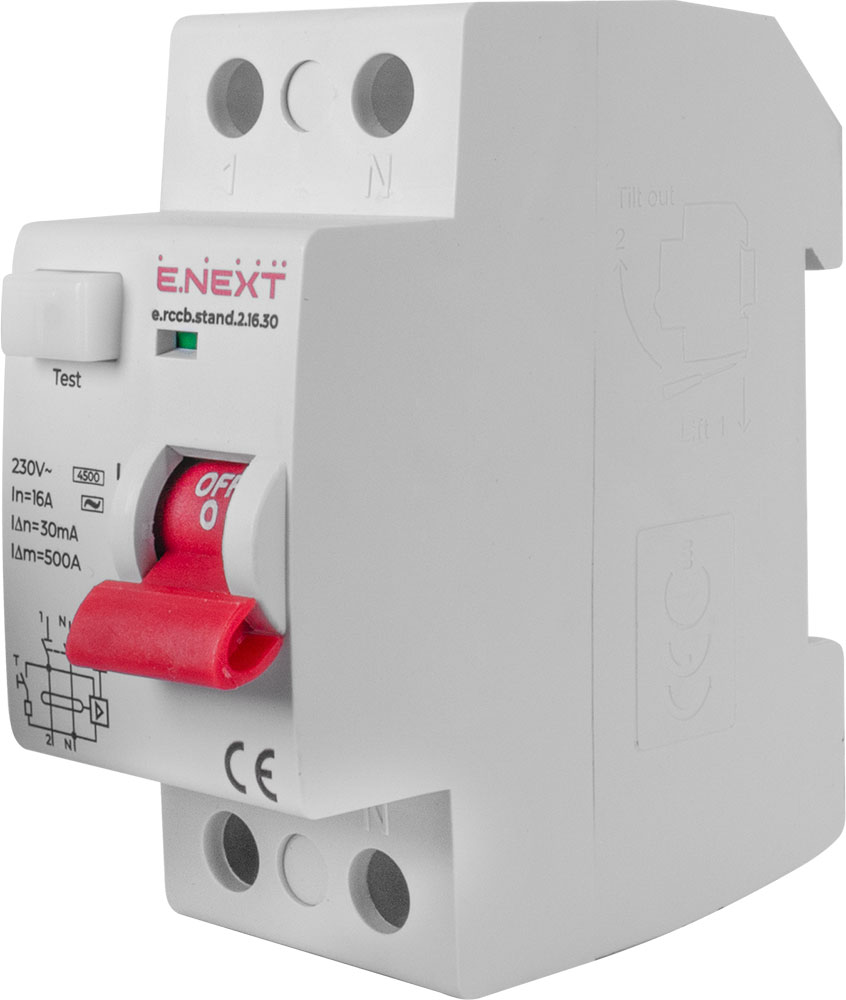
Electromechanical residual current protection is characterized by the fact that the operation of the device does not depend on the mains voltage, but depends only on the current leakage in the damaged line - differential current.
Electronic residual current devices, on the other hand, are voltage-dependent and require an external current source to operate an integrated circuit with a built-in electronic amplifier. This type is less common due to its lower reliability compared to an electromechanical device.
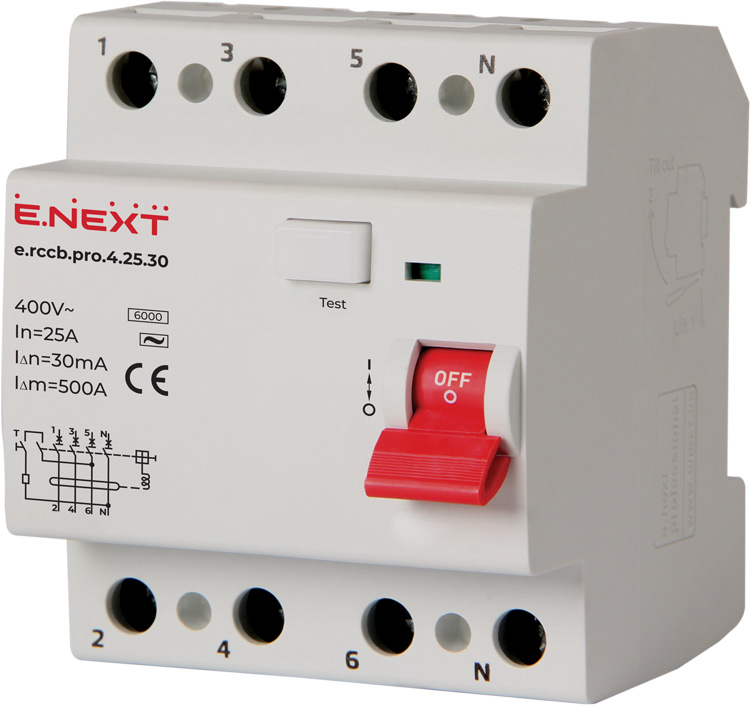
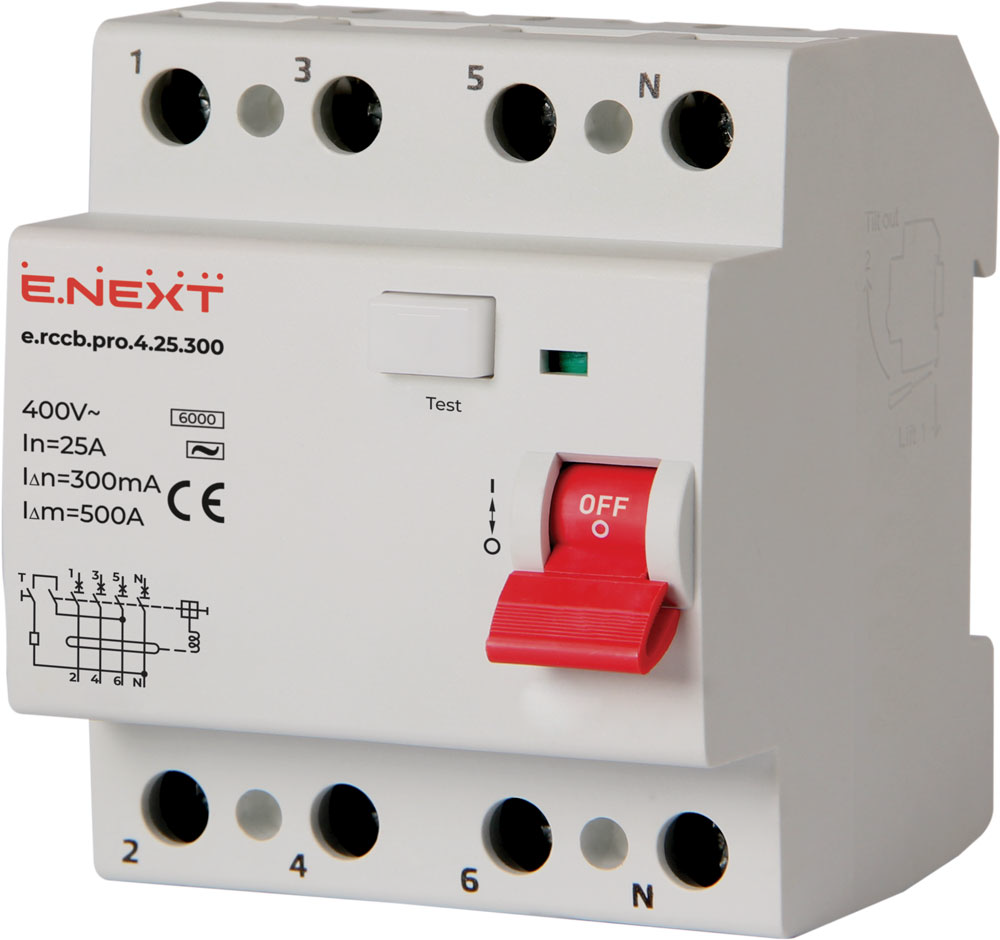
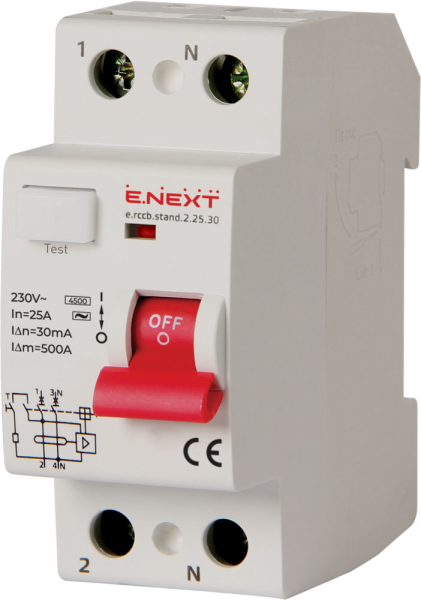
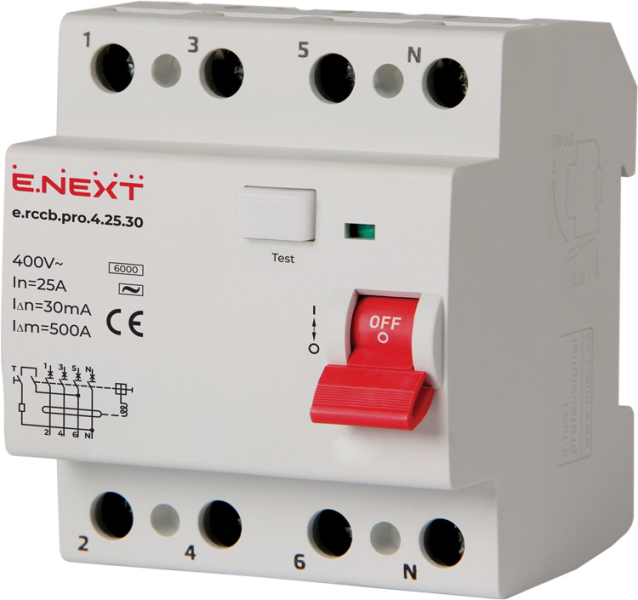
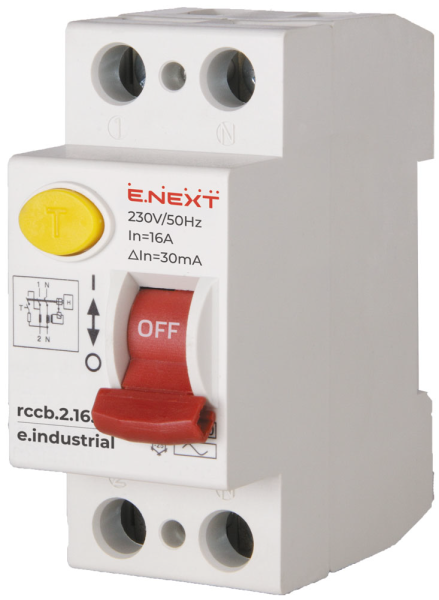
According to the number of poles, all residual current devices are divided into: two-pole (2P) and four-pole (4P). The main difference between these types is the use of the device in a single-phase or three-phase network. 2P devices are used in a single-phase network, and 4P, respectively, in a three-phase network.
Selection of residual current protection
Having understood the basic technical characteristics and the principle of operation of the residual current protection, we will try to determine which device to choose to protect your own network. Not everything is so unambiguous, and we will analyze everything in order.
The first thing to start with when choosing a residual current device is the purpose of the line on which it will be installed. If the residual current device will be installed on a group of devices that come into contact with water or sockets in the bathroom / kitchen, then it is necessary to stop at the residual current device with a leakage current of 10 mA, if it is necessary to protect household sockets in a living room or office, then it is worth stopping at the residual current device with a leakage current of 30 mA. In the case when the protection is installed at the entrance, in front of group devices, then you should stop at the residual current device with a leakage current of 100mA or 300mA (depending on the total load and length of the electrical wiring in the room).
Second, residual current protection and combined residual current protection?
If space is limited in the electrical panel, then it is worth stopping at a combined residual current device, since it will not be necessary to install overcurrent protection in the form of a circuit breaker in addition to the residual current device and take up additional space on the DIN rail. The advantage of a separate assembly of a residual current device and a circuit breaker is that in the event of a malfunction, you can determine the cause of its elimination: from overcurrent or from differential current, and in the case of a combined residual current device, the cause of the trip without additional manipulations will not be able to be determined, except in cases where the device has a separate handle responsible for indicating the cause of the trip. Such devices in our product range are e.elcb.stand. Another advantage of a separate installation of a residual current device and a circuit breaker is the simplified replacement, if the circuit breaker breaks down, then it is cheaper to replace it than to replace an expensive combined residual current device.
Third, type A or AC? In the case when there is a load with switching power supply (washing machine, microwave oven, computer) in the protected line, then for reliable protection it is worth installing a type A residual current device e.rcbo.pro, if the load is without such a unit (boiler, electric kettle, etc.), then for complete protection against electric shock, an AC residual current device will be sufficient.
Fourth, electromechanical or electronic residual current protection? Choosing electronic residual current protection can only be resorted to in order to save money and in the case when there is a higher or lower electromechanical differential protection in the same line, since only electromechanical devices can protect against unacceptable voltage fluctuations or burnout of a neutral conductor.
Fifth, the breaking capacity limit. Depending on the design level of the short-circuit currents, you must determine the breaking capacity of the residual current protection. In the Enext product range there is the e.industrial.elcb residual current protection with a maximum value of 10 kA.
We have only analyzed the main characteristics when choosing a residual current device; it is also necessary to take into account the technical indicators of each residual current device, which the manufacturer indicates in the device's passport.
Take responsibility for the safety of yourself and your loved ones, choose residual current protection from the ENEXT company.
Devices for different types of tasks and different price segments you can find in our online store.
What is differential current, where does it come from?
Types of residual current protection.
Subtypes of residual current protection
Selection of residual current protection
In stock