



Circuit breakers
Circuit breakers
What are circuit breakers?
Circuit breakers (also known as circuit breakers, or colloquially - fuses) are electromechanical components in the electrical circuit that protect the power transmission and power supply line, as well as the consumers connected to it, from overload or short circuits. Its main function is to interrupt the phase line when a problem occurs, unlike a regular fuse, which is used once, the circuit breaker is reset manually or automatically. The abbreviation MCB, often found in electrical engineering, is an abbreviation for English. miniature circuit breaker - "miniature circuit breaker." Often instead of "miniature" in this abbreviation, the word "modular" is used. Circuit breakers are installed in distribution boards at the entrance to the site (industrial/commercial building, residential building, apartment, etc.), as well as in metal and plastic boxes at the beginning of the protected line. In the electrical circuit, circuit breakers are connected in series with the protected device.
Learn more
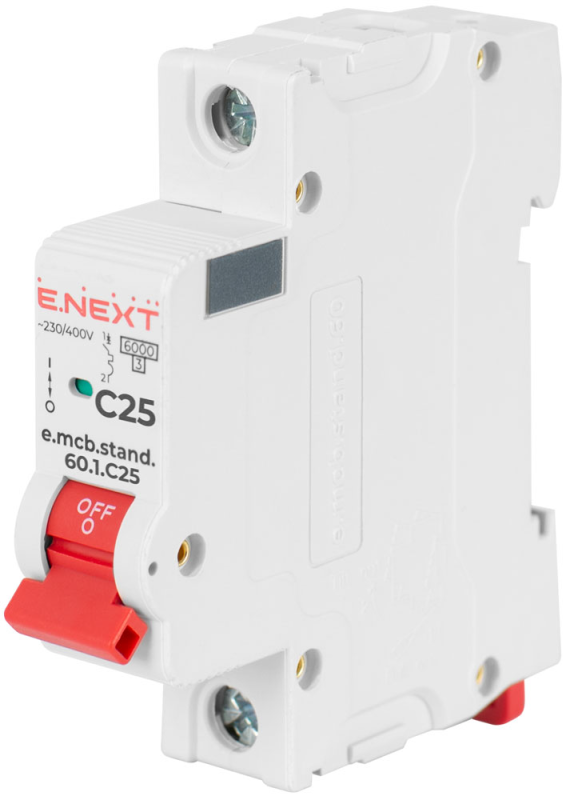
In normal conditions of the electrical network, after switching on the circuit breaker , a current constantly flows through it, which does not exceed the nominal value. In emergency situations - prolonged exposure to overload currents, the occurrence of short-circuit currents - circuit breakers will automatically disconnect the load from the power supply network for a short time after it has fulfilled its protective function.
Unlike their predecessors, fuses (FP), which perform a one-time protective function, and circuit breakers are reusable protective switching devices. After an emergency (short circuit, exposure to a significant overload current), F P is unsuitable for further operation, since its protective element is melted in quartz sand. After the protective element (bimetallic plate, see below) has cooled down, the circuit breakers can be put back into operation. However, it should be remembered that each subsequent emergency mode and operational switching under voltage in normal mode gradually reduces its service life. Once every six months, it is recommended to tighten the screw terminals of the circuit breakers , in order to neutralize the weakening of the mechanical compression of the contact connection, especially in situations where wires with aluminum conductors are connected to the circuit breakers .
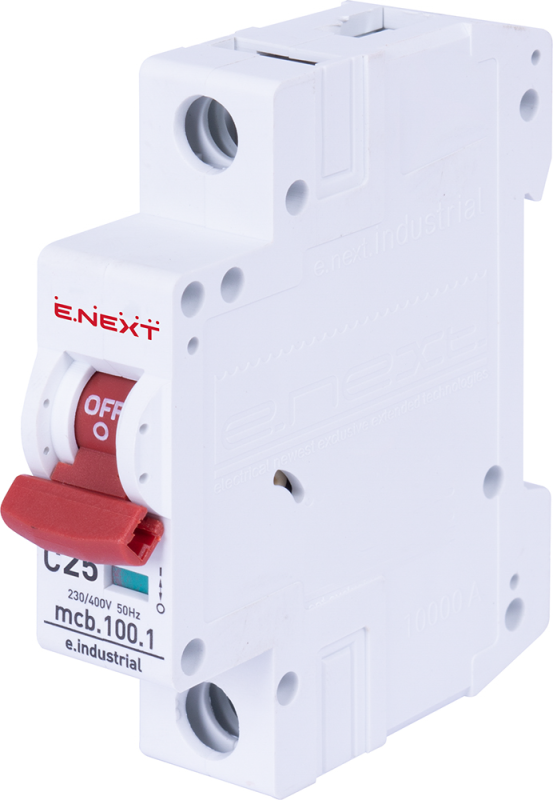
Circuit breaker structure
- Body made of non-flammable material;
- Screw terminals with protection against false connection (for example, circuit breaker 6 kA, e.mcb.pro) - for connecting wire / cable;
- Clamp (latch) - for mounting on Din-rail;
- Control handle - for on/off;
- Status indicator - for visual indication of the contact group status;
- Moving and fixed contacts - for switching the electrical circuit;
- Release mechanism - for tripping the circuit breaker;
- Electromagnetic release coil with core - acts on the tripping mechanism in the event of a short circuit;
- Bimetallic thermal release plate - affects the release mechanism during overload currents;
- Arc extinguishing chamber - for extinguishing the arc.
How do circuit breakers (fuses) work?
The operation of all circuit breakers is similar, but the details vary significantly depending on:
- voltage class
- the magnitude of the current
- fuse type
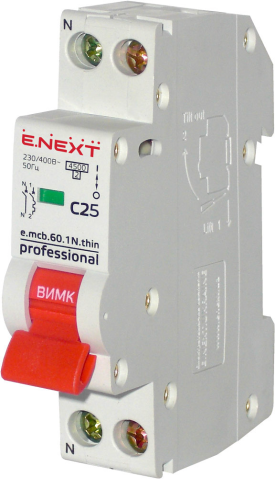
For a circuit breaker to operate, a fault must first occur. In the case of small mains and low-voltage circuit breakers, this occurs within the device itself, usually by the heating process of an electric current or the magnetic effects of the electric current. Circuit breakers for high currents or high voltages are usually equipped with protective relay pilot devices to detect a fault condition and operate the opening mechanism. These usually require a separate power source, such as a battery, although some high-voltage circuit breakers are self-contained with current transformers, protective relays and an internal control source.
What is the service life of circuit breakers and fuses?
The contacts of circuit breakers must be able to withstand the load current without overheating and must also withstand the heat caused by the arc produced when the circuit is broken (opened). The contacts are made of copper or copper alloys, silver alloys and other highly conductive materials. The service life of the contacts is limited by the erosion of the contact material due to wear of the contacts and due to wear of the mechanical element. Miniature and molded case circuit breakers are usually discarded when the contacts are worn out, but large power circuit breakers and high voltage circuit breakers have replaceable contacts. There are various methods for dealing with the arc caused by opening the contacts.
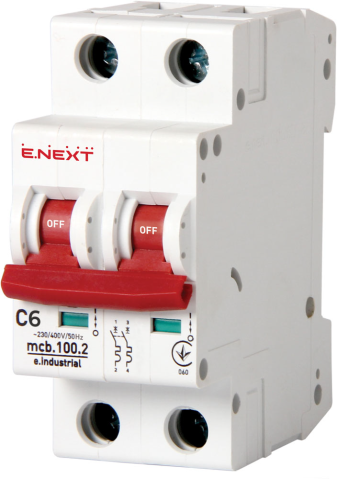
How are circuit breakers and fuses selected?
Circuit breakers, in addition to being selected based on the rated current that will flow through them, have a parameter and a maximum short-circuit current that they can safely interrupt. In the event of a short circuit, when the electrical contacts open to interrupt the huge current that is flowing, an arc is formed between the two poles of the open contacts, which would allow the current to continue to flow. This condition can create conductive ionized gases and molten or vaporized metal, which can cause the arc to continue or create additional short circuits, potentially leading to an explosion of the circuit breaker, the equipment and the installation in which it is installed. Typical circuit breakers for domestic panels are designed to interrupt short-circuit currents of the order of 10 kA (10,000 A)
What are the standards for circuit breakers and fuses?
The international standards IEC 60898-1 and the European standard EN 60898-1 define the rated current of a circuit-breaker for installation in low-voltage networks as the maximum current that the circuit-breaker is designed to withstand continuously (at an ambient temperature of 30 °C). The generally preferred values for the rated current are 1A, 2A, 4A, 6A, 10A, 13A, 16A, 20A, 25A, 32A, 40A, 50A, 63A, 80A, 100A, and 125 A. The circuit-breaker is designated by the rated current in amperes, but omits the symbol A on the device. Instead, the ampere figure is preceded by the letter B, C, D, or K which indicates the instantaneous tripping current - i.e. the minimum current value that causes the circuit breaker to trip without intentional delay (i.e. in less than 100 ms), expressed in relation to In: for curve B above 3 In, for curve C from 5In to 10In, for curve D from 10In to 20In, etc.
Types of circuit breakers and fuses:
- Low voltage circuit breakers
- Electromagnetic circuit breakers
- Thermomagnetic circuit breakers
- Magnetic - hydraulic circuit breakers
- Circuit breakers operating at medium voltage
- High voltage circuit breakers
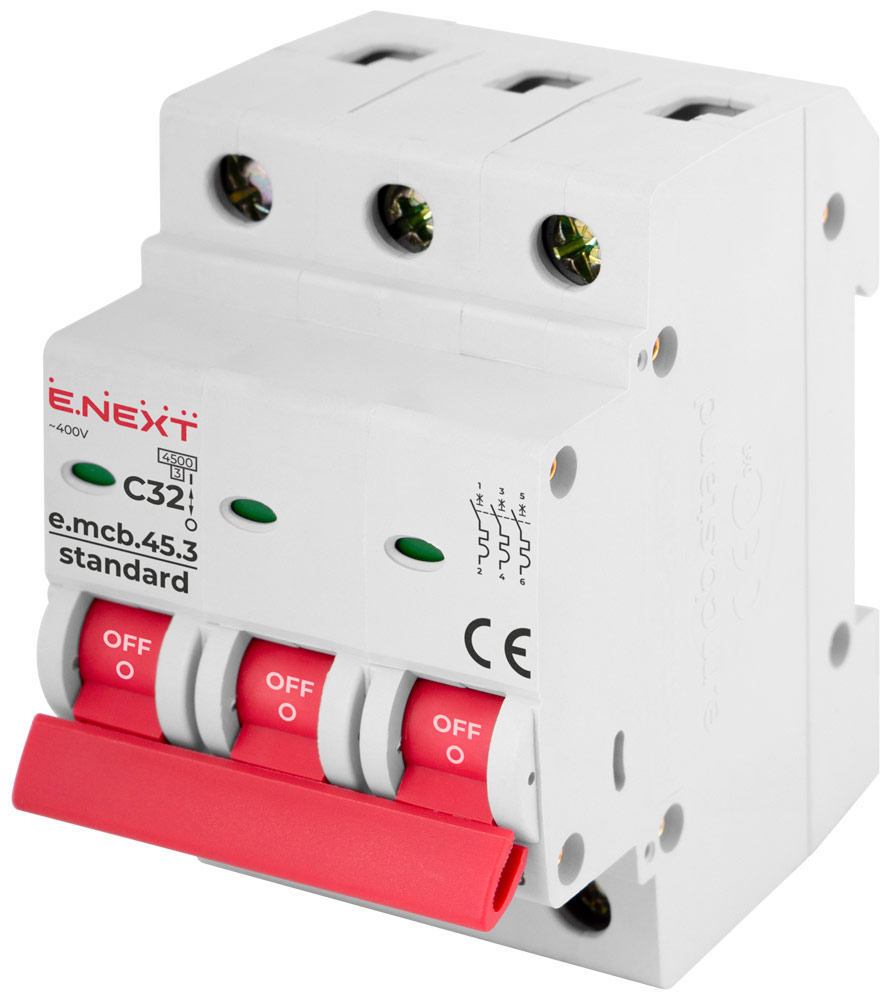
Types of circuit breakers and fuses according to the number of phases they interrupt:
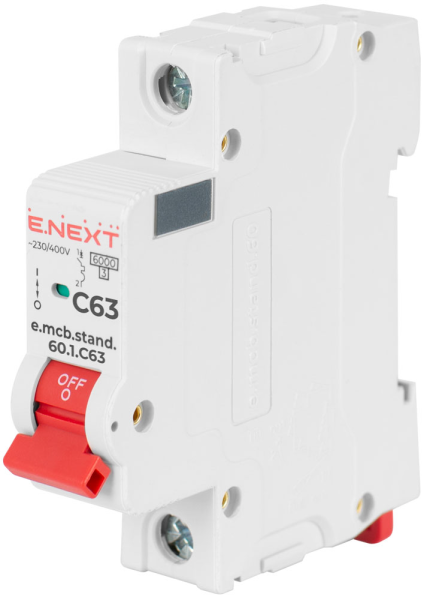
- single-phase circuit breakers
- single-phase circuit breakers with neutral interruption
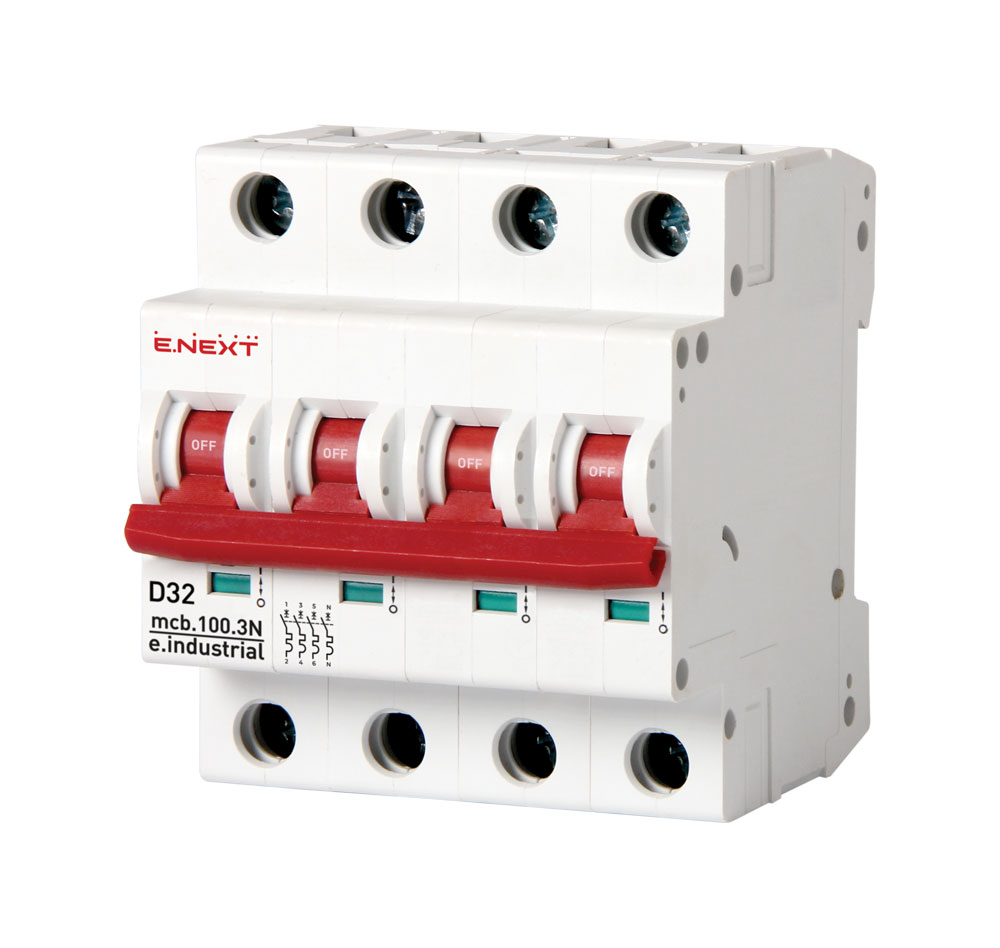
- three-phase circuit breakers, etc.
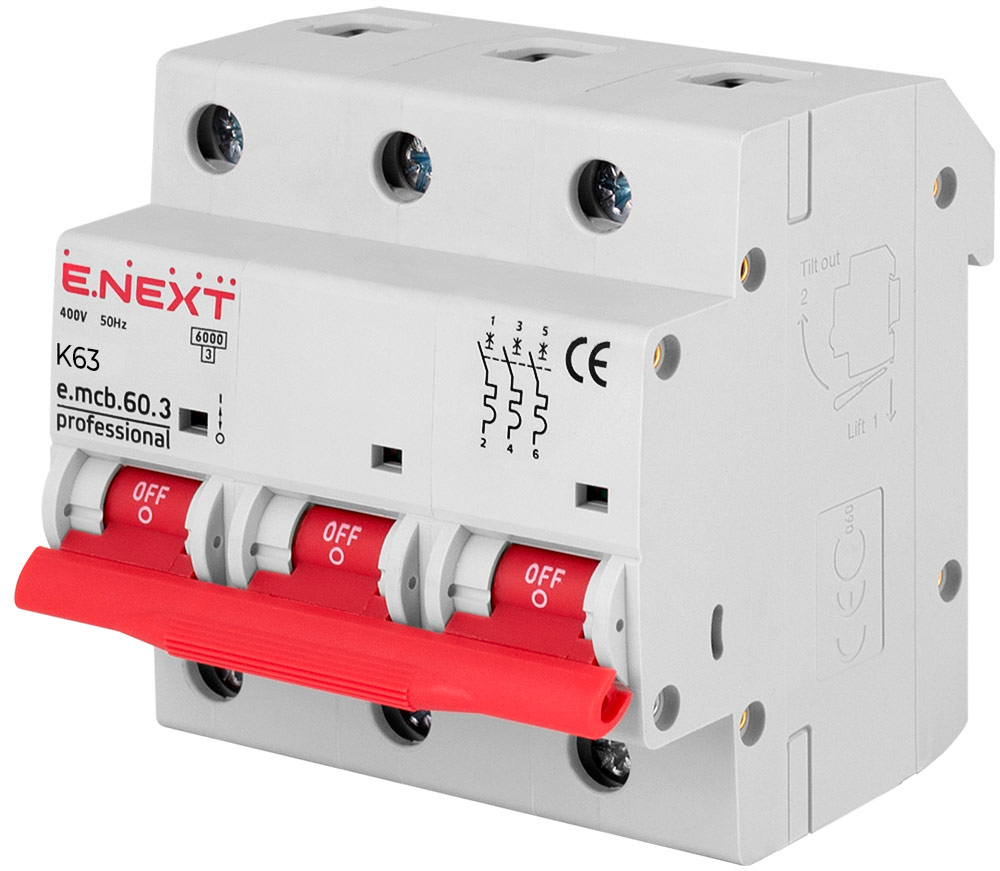
Circuit breakers and fuses from Enext
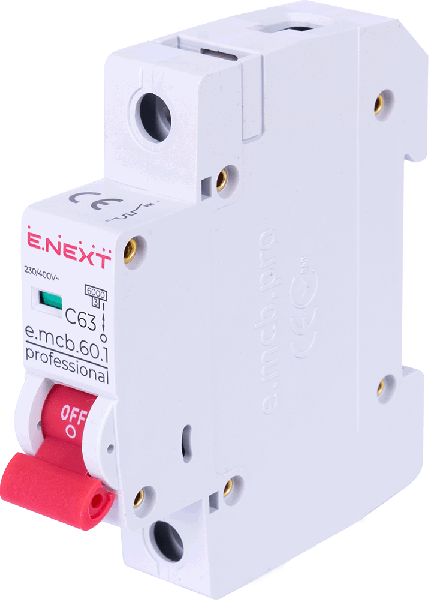
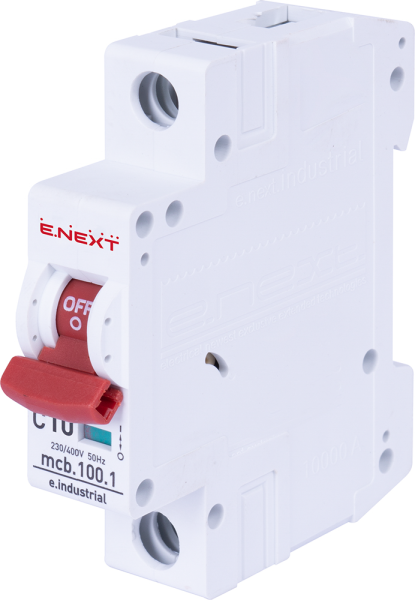
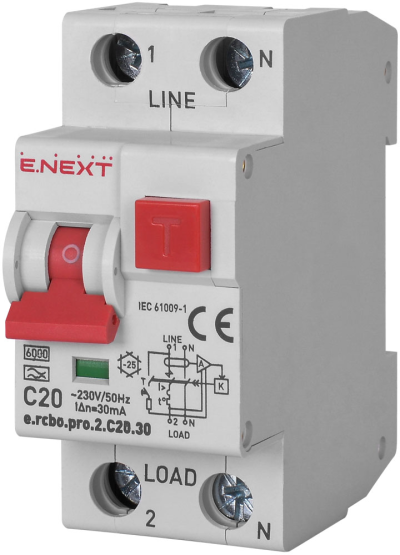
Enext Bulgaria EOOD offers an extremely wide variety of circuit breakers and fuses, our production with high quality, which does not prevent us from maintaining incredibly low prices.
What are circuit breakers?
Circuit breaker structure
How do circuit breakers (fuses) work?
What is the service life of circuit breakers and fuses?
How are circuit breakers and fuses selected?
What are the standards for circuit breakers and fuses?
Types of circuit breakers and fuses:
Types of circuit breakers and fuses according to the number of phases they interrupt
Circuit breakers and fuses from Enext
In stock